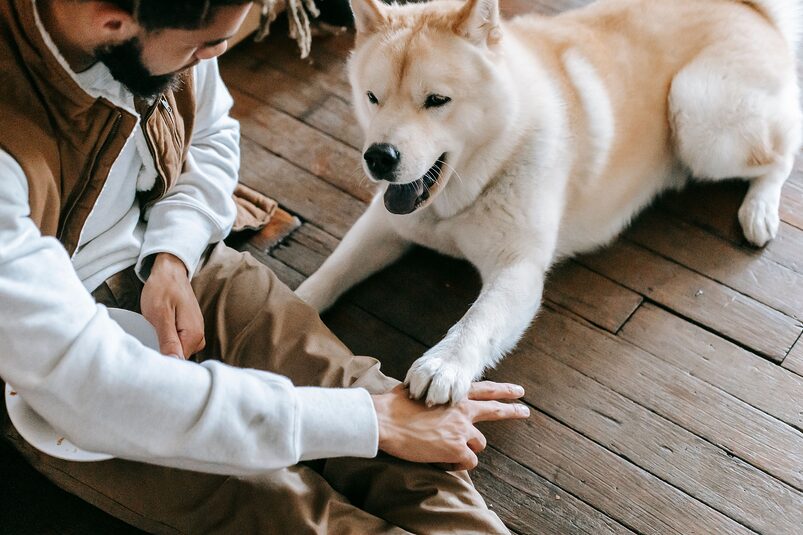
If the words “leash reactivity training” make you picture white-knuckle walks and apology tours past your neighbors, take a breath. This can actually be fun. I’m saying that as someone who’s spent more than a decade helping dogs of every shape and size learn to stay cool in the very moments that used to set them off. With a degree in Animal Behavior and years of behavior-modification work, I’ve seen a simple truth play out over and over: when training becomes a game, everyone relaxes, progress speeds up, and walking your dog stops feeling like a high-stakes mission. In this guide, I’ll show you how to turn leash reactivity training into a playful, confidence-building routine for both of you.
Here’s the big reframe: reactivity isn’t “bad behavior,” it’s big feelings on a short leash. Your dog is telling you, loudly, that they’re uncomfortable or overexcited. My job (and yours) is to meet the emotion first, then teach skills. We’ll set up wins, not “tests.” We’ll use pattern games, smart management, and generous reinforcement so your dog learns how to choose calm. Because calm gets them everything they want. When you combine a little neuroscience with a lot of play, leash reactivity training becomes the best part of your day together.
What Reactivity Really Is: Emotion First in Leash Reactivity Training
When I meet a new client, I ask them to describe their dog’s “oh no” moment in slow motion. Not the lunge at the end. Everything before it. Ears prick. Body stiffens. Mouth closes. Breathing changes. The dog stops taking treats. That sequence is the story of rising emotion. Reactivity lives there, and leash reactivity training works when we shift the dog’s feelings early, well before the outburst. If you can catch the moment your dog notices a trigger and help them feel safe, you’ve already done 80% of the work.
Another crucial piece is understanding that the leash changes everything. Off-leash, a dog can create space by moving away. On-leash, they’re stuck. The leash adds frustration and a little pressure, and if the trigger approaches head-on (like another dog on a sidewalk), it can feel like a trap. I teach handlers to think like a guide: “I see the thing, you see me, we flow together.” Leash reactivity training becomes a dance where you control distance, angle, and duration, and your dog learns that looking calmly is the move that pays.
Finding Threshold Distance: The Foundation of Leash Reactivity Training
If I could hand you one magic wand, it would be the ability to find and hold your dog’s threshold distance. That’s the distance at which they can notice a trigger and still eat, think, and respond. Too far and they don’t care. No learning. Too close and the feelings flood. No learning. At threshold, your dog can take information in and pair it with a positive outcome. It’s the sweet spot.
How do you find it? Start in a low-traffic area where you can see triggers before they’re on top of you. When your dog notices a trigger, quietly offer a high-value treat. If they take it immediately and can check back in with you, you’re outside the storm. If they refuse the treat, strain forward, or lock up and freeze, increase distance and change the angle. Diagonal steps away are your best friend. During leash reactivity training, your first win is locating that just-right distance and protecting it like a bodyguard. You’ll close the gap later; first, keep your dog in the learning zone.
The Management Stack That Makes Leash Reactivity Training Easier
I love fancy training plans as much as the next behavior nerd, but nothing accelerates leash reactivity training more than a solid management stack. Management means designing real life to make success easy and mistakes rare. It’s part art, part logistics, and it instantly lowers everyone’s stress.
Start with gear and routes. A Y-front harness with a front-clip attachment helps you guide the body without popping the neck. Pair it with a six-foot leash that feels good in your hands. Choose routes with visual barriers (parked cars, hedges, quiet side streets) and wide places to pass. Train at off-peak times in the beginning; fewer surprise encounters mean more clean reps. If your neighborhood is wall-to-wall triggers, drive to a big-box store parking lot on a Sunday morning and work at a distance from the action. I’ve had breakthrough sessions in the emptiest corners of strip malls where a dog can notice life and still feel safe.
Environment hacks matter too. Use window film or curtains at home to keep your dog from rehearsing bark-fests out the front window. Add white noise by the door if hall traffic gets them amped. Shorten walks on chaotic days, and trade duration for quality: ten minutes of focused, happy leash reactivity training beats forty minutes of “we survived.”
Pattern Games That Power Leash Reactivity Training
Pattern games are my secret sauce because they feel like play. They give your dog a predictable, easy action to do while the world does its thing. Patterns lower the cognitive load: no big decisions, just a routine that makes calm happen. And each clean repetition puts another coin in your dog’s “I can do this” jar.
The 1-2-3 Game is a classic. Walk and softly count “one… two… three.” On “three,” drop a treat by your shoe. Your dog learns that the good stuff happens close to you, on a rhythm. When a trigger appears at threshold distance, you can slide right into the game. It works because your dog has a beat to follow; the pattern does the heavy lifting. My other favorite is the U-Turn cue. Teach it in your living room: say “this way,” pivot 180 degrees, feed a treat as you both turn. Reinforce several times so it becomes automatic. On walks, the cue becomes a cheerful exit ramp from a tough situation. No drama, just flow.
For dogs who lock their gaze on triggers, I use the “Treat Magnet.” Hold a treat on your dog’s nose, let them gently nibble as you guide a few steps away, then deliver the rest of the treat when they’re back in their body. It’s not bribery; it’s a way to re-engage the thinking brain. In leash reactivity training, the first skill is often “Can you come back to me when you notice the thing?” Pattern games are how you say, “Yes, you can, and it’s easy.”
Engage/Disengage and LAT: Looking Without Lunging
Once your dog can hang at threshold, we switch to the “look and chill” curriculum: Engage/Disengage and “Look At That” or LAT. The idea is simple and powerful: your dog looks at the trigger, then chooses to look away (or back to you) to earn a reward. We reinforce the act of noticing calmly. In practice, I mark the glance (“Yes!”) the moment eyes land on the trigger, then deliver a treat as the dog looks back. Over time, we stretch the glance, reward the turn-away, and build a default: “See the thing, check in with my person.”
These games change the emotional math. Triggers stop predicting overwhelm and start predicting opportunity. With LAT, we get specific about criteria: brief glances at first, then slightly longer, then glances while the trigger moves, then glances at closer distances. I often pair LAT with pattern games (counting my “one-two-three” rhythm between glances), so the dog never feels stuck in a staring contest. If you want a deeper dive into positive methods and why they work, the American Veterinary Society of Animal Behavior has excellent, science-backed guidance.
Reinforcement Strategy: Paychecks Your Dog Understands
When people tell me, “he won’t take treats outside,” they’ve usually got a value, quantity, or timing problem. In leash reactivity training, reinforcement isn’t dessert; it’s a salary. Pay well, pay often, and pay on time. Use soft, high-value food that your dog can swallow quickly: think warm chicken, turkey meatballs, or stinky training treats. Size them like a pea so you can deliver many with no tummy trouble.
Delivery mechanics matter. Get the treat to your dog’s mouth fast after you mark the behavior. If your dog tends to surf the horizon, deliver the treat low and close to your leg to anchor them near you. For dogs that need more movement, toss treats behind you after a mark to create a built-in reset: they turn, eat, turn back, and you’ve naturally increased distance from the trigger. Keep your hand quiet and your body language loose; fussy hands create tension, and tension reads as “we’re not safe.” For a solid primer on force-free reinforcement strategies and why punishment backfires in these contexts, the AKC offers a concise overview with practical tips.
Emergency Plans During Leash Reactivity Training
You can do everything right and still get surprised. That’s not failure; that’s life. Build two emergency moves into your leash reactivity training so that when the curveball comes, you already know what to do. The first is the cheerful U-turn I mentioned earlier (“this way!”) paired with rapid-fire treats as you arc away. Practice it until it’s a reflex for both of you. The second is a scatter feed: say, “find it!” and toss a small handful of treats into the grass at your feet. Most dogs drop their focus to sniff and search, which is ethologically soothing and buys you time to reposition.
Choose your emergency exits with care. Don’t haul back on the leash, and don’t scold. That pours gasoline on a nervous system that’s already lit. Your goal is to interrupt the escalation and give the body something incompatible with lunging: turning, sniffing, eating, and moving away. I’ve used these emergency plans in crowded farmers’ markets with success, as long as my threshold work was solid. If you’ve rehearsed the moves when it’s calm, your dog can perform them when it counts.
Progress Tracking That Keeps You Motivated
Progress in leash reactivity training is built of tiny wins. If you don’t track them, your brain will forget them in favor of the one tough moment from last Thursday. I log three things after each training walk: the closest distance to a trigger at which my dog could still eat and respond, how long they could look and then look away, and how many clean reps we got. I also note the environment (quiet neighborhood at 7 a.m., medium-busy park at noon) because context matters.
Video is your secret weapon. A 15-second clip from your phone lets you see posture, latency, and subtle improvements you swear aren’t there. I show clients side-by-side videos of week one and week four, and they light up at differences that felt invisible day to day. Keep a simple chart on your fridge or a note on your phone. When your motivation dips, your data will carry you. You’ll also hand your vet or trainer a clear picture of what’s happening. A gift that makes professional support much more effective.
When to Call a Pro: Leash Reactivity Training With Backup
DIY only goes so far. If your dog’s reactivity includes a bite history, persistent attempts to escape, or a level of fear/anger that scares you, bring in a certified professional. Good leash reactivity training is tailored to the individual dog and the specific triggers, and an experienced coach can keep you in the learning zone, not the panic zone. I recommend seeking credentialed, force-free help through the International Association of Animal Behavior Consultants: Find an IAABC Consultant. Look for pros who take histories, use modern desensitization and counterconditioning, and measure progress in behavior, not just compliance.
Also, loop in your veterinarian. Pain and medical issues can fuel reactivity. Think arthritis, GI discomfort, skin irritation, or even loss of vision/hearing. If your dog’s behavior changes suddenly or you’re hitting a wall, a wellness exam can uncover physical contributors. And don’t underestimate the value of teamwork: your notes, your videos, your vet’s medical insight, and your trainer’s plan add up to a smoother, kinder path forward. When all the humans row in the same direction, dogs feel it, and they relax.
Bringing Play Back: Why Fun Wins in Leash Reactivity Training
The fastest way to drain the drama from reactivity is to make the alternative more rewarding and more fun than the outburst. That’s not a metaphor; it’s what your dog’s nervous system is learning in real time. Every time a look at a trigger pays with a treat, every time a U-turn turns into a happy race in the other direction, every time your counting game lands a snack at your heel, your dog is stockpiling emotional proof that life on leash can feel good.
I’ve turned hundreds of “nope” dogs into “we’ve got this” dogs by leaning into play. A Border Collie who used to ping off the end of the leash at the sight of joggers now flicks his eyes to his handler, trots into “1-2-3,” and taps the ground with his paw like, “Hit it, coach.” A tiny terrier who used to scream at skateboards will now choose a U-turn to the nearest patch of grass and bury her face in a scatter feed like it’s treasure hunting. That’s leash reactivity training at its best: emotional relief, clear options, and a dog who feels smart and safe enough to choose them.
Real-Life Walk Blueprint: Putting It All Together
Here’s what a 15-minute training walk might look like when you stitch these pieces together. Start with a quiet warm-up: two minutes of the 1-2-3 Game as you leave the house, then a few easy “this way” turns to remind your dog that you move together. Once you’re in your training zone (somewhere open and low-distraction), scan for potential triggers and choose an angle that gives you space. When your dog notices a trigger at threshold, mark the glance and feed. Count “one-two-three” and pay at your heel. If the trigger moves closer, slide diagonally away while continuing your pattern. If you get a surprise pop-up, use your “this way!” U-turn and drop into a brief scatter feed.
Keep your session short and sweet. Training isn’t a marathon; it’s a series of repeatable, positive experiences. End with a goofy game your dog loves: a handful of tossed treats to chase in the grass, or a quick trick they’re proud of. The walk should end with your dog’s body loose and your shoulders down. That’s the bar I set for successful leash reactivity training: you both come home smiling.
Troubleshooting: Common Sticking Points in Leash Reactivity Training
If your dog won’t eat outside, upgrade the menu and lower the difficulty. Warm the food, make the pieces smaller, and increase the distance until your dog says, “Okay, I can handle this.” If the environment is chaotic, switch to an emptier training location for a week or two. You can always generalize later. If your dog surges the moment you step out the door, spend five minutes doing pattern games in your driveway or lobby before you take the first block.
If your dog locks on like a laser, add motion to your reinforcement. Toss a treat behind you after you mark the glance; the turn-break-eat-turn cycle resets their brain. If you feel tension in your leash hand, switch hands or change your grip. Our bodies broadcast stress to our dogs with surprising volume. Lastly, keep your expectations kinder than you think they need to be. Progress in leash reactivity training often looks like “smaller reaction, faster recovery.” That is progress. Celebrate it.
Safety, Ethics, and the Long Game
I’ll be blunt: aversive tools (like prong or shock collars) may suppress behavior in the moment, but they often increase anxiety and aggression over time because they punish emotion, not teach skills. The science supporting positive reinforcement, desensitization, and counterconditioning is robust, and it’s kinder to boot. For a deeper understanding of evidence-based, humane practices, the AVSAB Position Statements provide a great starting point.
Your goal isn’t to “win” against your dog; it’s to win with them. When leash reactivity training honors feelings first, teaches patterns that are easy to follow, and pays generously for good choices, the world stops feeling like a test and starts feeling navigable. The long game is a relationship where your dog trusts you to keep them safe, and you trust your dog to tell you when they need more space. Get that right, and the leash becomes a connection, not a constraint.
I’ve walked the long road with countless teams, and I promise the lightbulb moments come. The first time your dog notices a trigger, looks up at you, and you both breathe, that’s the moment you’ll realize leash reactivity training really can be fun. It’s not magic; it’s method. And it’s incredibly doable when you give your dog clarity, choice, and reinforcement that feels worth working for.